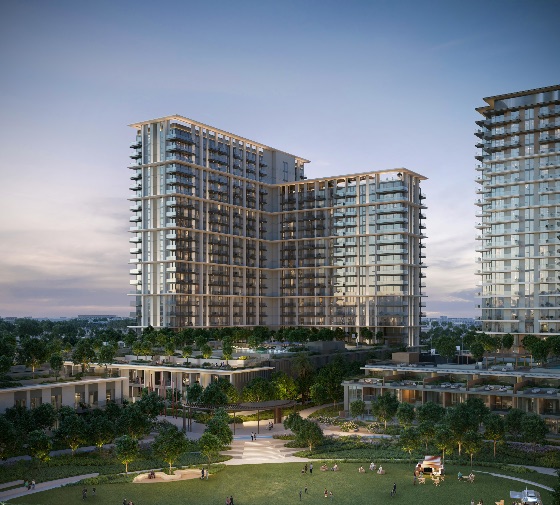
For years, Abu Dhabi was the UAE market international buyers forgot. The first half of 2026 ended that — with the strongest numbers the emirate has ever printed.
The Abu Dhabi Real Estate Centre recorded AED 117 billion in transactions in H1 2026 — up 112% on the year before — with foreign direct investment up 309% to a record AED 13.8 billion, exceeding in six months what the whole of 2025 attracted. Off-plan is doing the heavy lifting: market reports put it at roughly nine-tenths of residential sales value. If you are considering joining those buyers, this guide covers the system, the process, the protections and the differences from Dubai that actually matter.
Abu Dhabi’s moment, in official numbers
| Measure (H1 2026) | Figure | Change YoY |
|---|---|---|
| Total transactions | AED 117 billion | +112% |
| Sales transactions | AED 86.1bn / 16,838 deals | +163.7% value |
| Foreign direct investment | AED 13.8 billion | +309% |
| Buyer nationalities | 116 | vs 82 a year earlier |
Beneath the totals, market research adds the texture: residential sales of AED 70.4 billion in the half — nearly triple a year earlier — with off-plan at about 89% of residential sales value and roughly 70% of value coming from foreign buyers. Activity concentrates hard: Hudayriyat Island alone accounted for around AED 19 billion and Saadiyat Island about AED 13.3 billion of residential sales value in the half, with a small group of major developers behind most launches.
Abu Dhabi’s market is institutional by design: fewer developers, bigger masterplans, destination islands — a shorter menu of larger decisions.
Who can buy, and where
Foreign buyers own property in Abu Dhabi’s designated investment zones — and conveniently, the investment zones are where everything you’d want to buy actually is:
- Yas Island — the entertainment anchor: theme parks, the F1 circuit, malls, and a deep bench of apartment and villa communities with a strong rental story.
- Saadiyat Island — the cultural district: the Louvre Abu Dhabi and the museum quarter, beaches, and the emirate’s premium pricing.
- Al Reem Island — the high-rise residential core minutes from the CBD; the closest thing to a “city centre apartment” market.
- Hudayriyat Island — the new volume leader: a vast active-lifestyle masterplan that led the emirate’s residential sales in H1 2026.
Which of these fits which buyer is its own conversation — the short version is that Yas and Reem are yield stories, Saadiyat is a prestige-and-scarcity story, and Hudayriyat is a growth story priced at launch stage.
ADREC, DARI and how the system works
Abu Dhabi’s property system runs through two names you will meet constantly:
- ADREC — the Abu Dhabi Real Estate Centre: the emirate’s regulator and registrar, the counterpart of Dubai’s DLD, responsible for registration, regulation and the market data quoted above.
- DARI — ADREC’s digital platform: transactions, contract registration, ownership records, valuations and services all run through it. As a buyer you will see DARI at contract registration, and your ownership record lives there — it is also where you can verify a project and developer before committing, which you should.
The practical effect is that Abu Dhabi’s process is unusually digital and legible: a registered project, a registered contract and a traceable escrow account are all checkable facts, not promises.
The buying process, step by step
- Choose project and unit — launches allocate quickly in this market; have your budget and documents ready before launch day, not after.
- Reserve — booking form and deposit against the unit.
- Sign the SPA — the sale and purchase agreement fixes the construction-linked payment schedule. The structures mirror Dubai’s — front-loaded, back-loaded and post-handover plans all appear; the mechanics are in the payment plans guide.
- Register the contract — the off-plan sale is registered through the DARI system, recording your interest long before a title deed exists.
- Pay into escrow — instalments go to the project’s escrow account and are released to the developer against construction progress.
- Handover — final payment, snagging, and title registration through ADREC.
Budget for registration and admin fees on top of the price — Abu Dhabi’s schedule differs from Dubai’s 4% DLD model, so confirm the current rates for your transaction rather than copying a Dubai calculation across. The logic of fee-stacking — what sits on top of the headline price — is the same everywhere and is worked through in the fees & buying costs guide.
Cost the structure before the launch
Abu Dhabi launches move fast, and the payment plan decides what actually leaves your account before handover. Run your budget through every structure first.
Compare payment plans →Escrow and your protections
Abu Dhabi requires registered off-plan projects to operate project-specific escrow accounts under the emirate’s real estate law: your payments are held and released against construction progress rather than passing straight to the developer’s general funds. Combined with contract registration through DARI, the structure is the same three-legged stool as Dubai’s — regulated escrow, registered interest, regulator oversight — implemented by a different authority under different legislation.
The checks before signing are therefore identical in spirit: confirm the project is registered, confirm the escrow account details, and confirm the developer’s delivery record. In Abu Dhabi’s concentrated market that last check is quicker than in Dubai — the major names have long, visible track records — but do it anyway.
The Golden Visa equity rule
The ten-year Golden Visa via AED 2 million of qualifying property is a federal route and applies in Abu Dhabi as elsewhere. The catch buyers miss: Abu Dhabi has historically applied the threshold to unencumbered equity — the AED 2 million is expected to sit outside any mortgage, with financing running through UAE banks. That is a stricter reading than Dubai’s practice, and it changes how you structure a purchase if the visa is part of the plan: a heavily financed AED 2.2 million unit that would qualify in Dubai may not clear Abu Dhabi’s bar.
Practice on visa criteria evolves, so treat this as the thing to verify on the week you buy — not as settled law. If you are funding from abroad, the home-country side — remittances, reporting, tax — is covered in the India, UK and USA guides; the mechanics are the same whichever emirate the property is in.
How it differs from buying in Dubai
- Separate systems. ADREC and DARI, not DLD and Oqood. Same principles, different registrations, different fee schedules — never assume a Dubai number carries over.
- A concentrated market. A handful of major developers and a few destination islands account for most of the volume. Less screening work, less variety — and pricing power sits with fewer sellers.
- Momentum vs depth. Abu Dhabi currently has the growth numbers; Dubai retains the far deeper resale market. If an early exit matters to you, that difference outranks every growth statistic in this guide — the full three-way comparison, including Ras Al Khaimah, is on the guides index.
- The visa practice. The equity rule above — the single most common surprise for buyers arriving from a Dubai mindset.
Common questions
Can foreigners buy off-plan in Abu Dhabi?
Yes — in the designated investment zones, which include Yas, Saadiyat, Al Reem and Hudayriyat islands. Buyers of 116 nationalities invested in H1 2026 per ADREC, with foreign investment at record levels.
What are ADREC and DARI?
ADREC is Abu Dhabi’s real estate regulator and registrar; DARI is its digital platform where contracts, registrations and ownership records live. Think DLD and its systems, Abu Dhabi edition.
Is my off-plan payment protected?
Registered projects run project-specific escrow accounts with milestone-linked releases, and your contract is registered through DARI early in the process. Verify both before signing — both are checkable facts in Abu Dhabi’s system.
Which area should I buy in?
Depends on the job: Yas and Al Reem for rental yield stories, Saadiyat for prestige and scarcity, Hudayriyat for launch-stage growth — it led the emirate’s residential sales in H1 2026.
Does the AED 2M Golden Visa work with a mortgage in Abu Dhabi?
Historically Abu Dhabi has expected the AED 2 million to be unencumbered equity, with financing through UAE banks — stricter than Dubai’s practice. Confirm the current rule before structuring the purchase around the visa.
Is it too late to buy into Abu Dhabi’s run?
Prices have moved — off-plan averages caught Dubai’s during 2025–2026 — but the drivers are structural: government-led supply, record foreign inflows, destination infrastructure. The honest answer is that you are no longer early; whether you are late depends on the specific project and price, which is exactly what to take advice on.
Want the current Abu Dhabi picture?
Launches allocate fast here. Tell me your budget and whether you’re buying for yield, prestige or growth — I’ll send you what genuinely fits, and what I’d let pass.
Message me on WhatsApp →Market figures are from ADREC publications via WAM and the Abu Dhabi Media Office, with residential-segment detail from market research reporting, correct as at the date above. Investment-zone rules, fee schedules and Golden Visa practice change; verify current requirements with ADREC, DARI or your advisor before committing. Nothing here is financial, investment or immigration advice; property values can fall as well as rise.