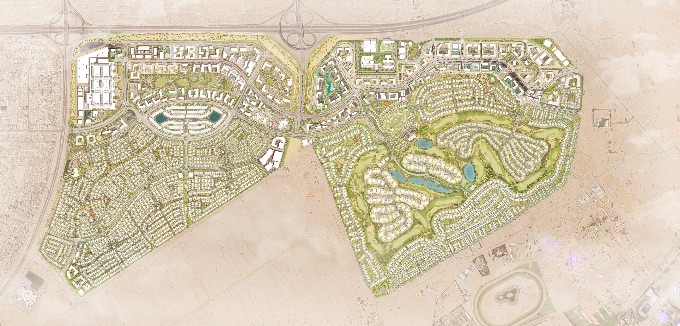
Two years ago, “buying off-plan in the UAE” meant Dubai, full stop. In 2026 I spend as much time answering questions about Abu Dhabi and Ras Al Khaimah — and the honest answer is that each of the three now does something the others don’t.
This guide puts the three markets side by side the way I would for a client: the official numbers first, then what each emirate is actually like to buy in, then the regulatory and visa differences that catch people out — and finally which buyer each one genuinely fits. If you want the general mechanics of off-plan first — payment structures, fees, escrow — start with the payment plans guide and come back.
Why this is suddenly a three-emirate question
Three things changed. Dubai’s record run — over AED 917 billion in transactions in 2025, per Dubai Land Department figures — pushed prices in its prime districts to levels that send value-hunters looking elsewhere. Abu Dhabi’s market more than doubled in the first half of 2026, with the Abu Dhabi Real Estate Centre reporting AED 117 billion in transactions, up 112% year on year, and record foreign investment. And Ras Al Khaimah acquired something no UAE emirate has ever had: a dated, multi-billion-dollar catalyst in the Wynn resort, due to open in September 2027.
So the question I now get weekly — “which emirate?” — is legitimate. It is also unanswerable in general. It depends on what you are optimising for, which is what the rest of this guide unpacks.
The three markets, in numbers
| Dubai | Abu Dhabi | Ras Al Khaimah | |
|---|---|---|---|
| Latest market size | AED 917bn (2025) | AED 117bn (H1 2026) | AED 12.4bn (2025) |
| Growth | +20% YoY | +112% YoY | off-plan 85% of deals |
| Avg off-plan price | ~AED 2,030/sq ft | ~AED 2,191/sq ft | below both, varies by index |
| Regulator | DLD / RERA | ADREC / DARI | RAK RERA |
| Signature catalyst | Depth & liquidity | Government-led pipeline | Wynn, Sept 2027 |
Two things stand out. First, the sheer difference in scale: Dubai’s market is an order of magnitude larger than Ras Al Khaimah’s. That is not a scoreboard — it is a liquidity statement, and liquidity is what you need the day you want to sell. Second, the growth rates run the other way: the smaller the market, the faster it is currently appreciating. That is the classic early-cycle pattern, with everything it implies in both directions.
Dubai: depth, liquidity and the widest menu
Dubai remains the default for a reason. It has the region’s deepest secondary market, the longest off-plan track record, the broadest choice of developers and districts, and a buyer pool drawn from everywhere — which is what you are really buying when you think about your exit. Selling an off-plan contract before handover, or a completed unit after it, is simply easier where more buyers are looking.
The trade-off is that the discount for being early has compressed in the prime districts. Record demand — including the safe-haven inflows that have accelerated since 2022 — means genuinely underpriced launches in established locations are rarer, and the best ones allocate fast. Value in Dubai increasingly means either emerging districts or paying fairly for quality and relying on the market’s depth rather than a launch discount.
The most expensive option is also the most liquid and the most forgiving — the market most likely to let you change your mind.
Abu Dhabi: momentum and the government pipeline
Abu Dhabi is the story of 2026. ADREC’s own half-year figures — AED 117 billion in transactions, up 112%, with foreign direct investment up 309% to AED 13.8 billion, already exceeding the whole of 2025 — describe a market moving from quiet to institutional favourite in about eighteen months. Buyers came from 116 nationalities in that half-year, up from 82 a year before.
What makes Abu Dhabi different in character is how supply arrives: heavily masterplanned, concentrated among a small group of large developers, and anchored on destination islands — Saadiyat’s museum district, Yas’s entertainment core, and Hudayriyat’s emergence as the new volume leader. Off-plan dominates the market — accounting for the overwhelming majority of residential sales value in recent reporting — so you are mostly choosing between a handful of credible names rather than screening hundreds of unknown ones.
The trade-offs: averages have already caught Dubai’s, the resale market, while growing, is younger and more concentrated, and the choice of product is narrower. You are betting on the continuation of a government-led build-out — historically a reasonable bet in Abu Dhabi, but a different risk shape from Dubai’s organic depth.
Ras Al Khaimah: entry price and a dated catalyst
Ras Al Khaimah is the smallest and youngest of the three markets — AED 12.4 billion in sales across roughly 6,600 transactions in 2025, with off-plan making up 85% of deals — and the one with the clearest single thesis. The $5.7 billion Wynn resort on Al Marjan Island, the UAE’s first licensed gaming resort, opens in September 2027, and the market around it has been repricing in anticipation: index data shows RAK residential capital values up around 15% year on year, with Al Marjan apartments ahead of that figure on most measures.
The appeal is obvious: entry prices below Dubai and Abu Dhabi, a hard date for the catalyst, and a hotel-led tourism build-out that extends beyond Wynn. The risks are equally legible: a thin secondary market, heavy dependence on one project’s success, and launch pricing in the hottest pockets that already assumes a good outcome. RAK is the emirate where buying well — the right project, the right price, the right payment plan — matters most, because the market’s depth will not bail out a mistake.
Same budget, three emirates
Whichever emirate you lean toward, the payment structure decides what actually leaves your account before handover. Cost it on your own number first.
Compare payment plans →Regulation and Golden Visa: what differs
All three emirates run regulated off-plan regimes — but they are separate systems, and the differences matter in practice.
- Dubai — the Dubai Land Department and RERA, escrow accounts under Law No. 8 of 2007, and interim Oqood registration of your unit long before the title deed. The most tested regime, with the longest case history.
- Abu Dhabi — the Abu Dhabi Real Estate Centre (ADREC), with transactions and ownership running through the DARI digital platform. Escrow and project registration requirements apply to off-plan sales.
- Ras Al Khaimah — RAK RERA under the emirate’s Law No. 12 of 2023, which requires developers to hold an off-plan sale permit, register the project and open a project escrow account; escrow accounts in RAK have been regulated since Decree No. 10 of 2014.
On the Golden Visa, the headline rule is federal: AED 2 million of qualifying property opens the ten-year route in any emirate. The implementation details are not identical — Abu Dhabi has historically applied the threshold to unencumbered equity, with financing expected through UAE banks, a stricter reading than Dubai’s. If the visa is part of your plan, confirm the current practice in the specific emirate before structuring the purchase — and note that how you fund it from abroad has its own rules, covered in the India, UK and USA guides.
Which emirate fits which buyer
Strip the marketing away and the fit question resolves fairly cleanly:
- Buy in Dubai if liquidity and optionality rank above everything — you want the deepest resale market, the most payment-plan choice, and a market that forgives a change of plan. First purchase in the UAE? This is still my default recommendation.
- Buy in Abu Dhabi if you want current momentum with institutional-grade developers and are comfortable choosing from a shorter menu — particularly if the destination islands match how you or your tenants would actually live.
- Buy in Ras Al Khaimah if you have a defined thesis about 2027, an appetite for an early-cycle market, and the discipline to be selective — it offers the lowest entry and the highest variance of the three.
- Split, if the budget allows. The genuinely diversified answer I give larger budgets: a liquid Dubai core holding plus a smaller RAK or Abu Dhabi position is a cleaner risk shape than everything in one emirate.
Dubai is the market you can always leave. Abu Dhabi is the market arriving. Ras Al Khaimah is the market with a date on it.
One honest closing note: percentage growth is loudest in the smallest market, and marketing leans on it hard. A 20% rise on a thin market is easier to print than to realise on exit. Weigh growth rates against the depth of the market you will one day be selling into — that single habit filters most bad decisions out.
Common questions
Which emirate is best for off-plan investment in 2026?
No universal answer. Dubai for liquidity and choice, Abu Dhabi for momentum with institutional developers, Ras Al Khaimah for entry price and the 2027 Wynn catalyst. The right pick depends on budget, horizon and how important a quick exit is to you.
Is Abu Dhabi really more expensive than Dubai now?
On off-plan averages it has become comparable — early-2026 market reports put Abu Dhabi around AED 2,191 per sq ft against roughly AED 2,030 in Dubai — but Dubai’s range is far wider in both directions. Averages orient; they don’t price a specific unit.
Is Ras Al Khaimah safe to buy off-plan in?
It runs a regulated regime — RAK RERA, off-plan sale permits, project registration and escrow accounts under Law No. 12 of 2023 and Decree No. 10 of 2014. Regulatory protection is not the same as market depth, though: RAK’s resale market is thin, so buy with a plan to hold.
Does the AED 2M Golden Visa work in all three emirates?
Yes, the ten-year route via qualifying property is federal. Abu Dhabi has historically required the AED 2 million to be unencumbered equity with financing through UAE banks — stricter than Dubai — so confirm current practice where you buy.
Where will prices rise most by 2027?
Honestly: nobody knows, and anyone who quotes you a number is selling something. The observable facts are that RAK and Abu Dhabi are currently appreciating faster in percentage terms from smaller bases, while Dubai compounds more slowly on far deeper volume.
Can I buy in Abu Dhabi or RAK without visiting?
Yes — remote purchase is routine across the UAE, with digital registration (DARI in Abu Dhabi) and power of attorney where needed. The process differs slightly by emirate; message me and I’ll walk you through the one you’re considering.
Tell me your budget. I’ll tell you which emirate.
Send me your number, your horizon and whether the visa matters. I’ll come back with which of the three markets genuinely fits — and where in it I’d look first.
Message me on WhatsApp →Market figures are from Dubai Land Department publications via the Dubai Media Office and WAM, ADREC releases via WAM, and press and market-research reporting for Ras Al Khaimah and price averages, correct as at the date above. Averages conceal wide ranges and are orientation only, not valuations. Golden Visa criteria and emirate-level practice change; verify current rules before structuring a purchase. Nothing here is financial, investment or immigration advice; property values can fall as well as rise.