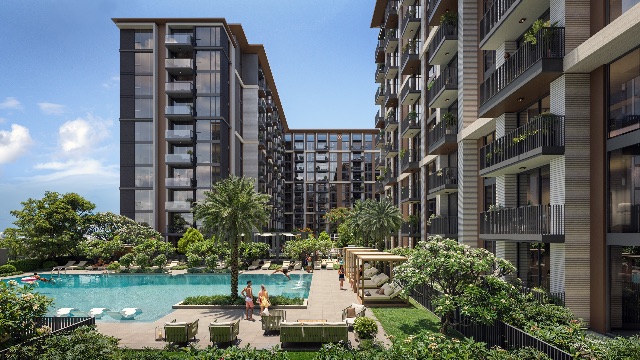
One is a promise with a payment schedule. The other is keys in your hand.
Ask which is "better" and you will get whichever answer suits the person selling to you. The honest answer is that off-plan and ready are different financial products that happen to end in the same thing — a property — and the differences between them are more measurable than the marketing on either side suggests.
This guide puts the two routes side by side on the five things that actually decide it: what each costs to buy, how you pay, when the property starts working for you, what can go wrong, and how you get out. No verdict at the end that conveniently matches what I sell — a checklist that tells you which fits your situation.
The short version
Strip both pitches away and the trade looks like this:
| Off-plan | Ready | |
|---|---|---|
| Transaction costs | ≈ 4–5% of price | ≈ 7–8% of price |
| How you pay | Instalments over the build, interest-free | Full price at transfer (cash or mortgage) |
| Mortgage cap | 50% of value, all buyers | Up to 80% (expat first home ≤ AED 5M) |
| Income starts | At handover, years away | Immediately |
| Main risk | Construction & delay | Full capital committed on day one |
| Exit before you're done | Assignment after ≈ 30–40% paid, developer NOC | List and sell any time |
Read down the columns and the real shape appears: off-plan is the cash-flow product — cheaper to enter, paid gradually, nothing earned until the end. Ready is the balance-sheet product — everything committed at once, earning from day one. Which is better depends entirely on which side of that trade your money is on.

What each route costs to buy
Counter-intuitively, buying unbuilt costs less in fees than buying finished. The 4% Dubai Land Department fee applies to both routes — on off-plan it is paid at Oqood registration near booking, on ready at the transfer appointment. Everything else stacks differently:
| Fee | Off-plan (from developer) | Ready (resale) |
|---|---|---|
| DLD registration fee | 4% of price | 4% of price |
| Agency commission | Usually AED 0 — developer pays | 2% of price + VAT |
| Registration / trustee | Oqood admin, ~AED 300 | Trustee office, AED 4,000 + VAT |
| Developer NOC | Not applicable | AED 500–5,000 |
| Admin fees | Developer admin, AED 1,500–6,000 | — |
| Typical total | ≈ 4–5% | ≈ 7–8% |
On an AED 2,000,000 purchase that difference is roughly AED 60,000–70,000 — mostly the 2%-plus-VAT commission that a ready-market buyer pays and an off-plan buyer usually does not, because on new launches the developer pays the broker and the price is the same with or without one. The full off-plan stack, fee by fee, is worked through in the fees & buying costs guide.
Lower transaction costs do not make the property itself cheaper. Launch pricing versus ready pricing varies by project, developer and market moment — there is no reliable rule that "off-plan is X% below ready," and anyone quoting one is selling something.
How you pay: instalments vs mortgage
This is the deepest structural difference between the two routes, and it is set by regulation, not preference.
Off-plan: the developer is your lender
An off-plan purchase is paid in instalments across the build — 80/20, 60/40, post-handover and everything between, compared properly in the payment plans guide. Those instalments are interest-free: no lender, no approval process, no rate risk during construction. The schedule is fixed the day you sign.
If you want a bank involved instead, the UAE Central Bank caps lending on off-plan property at 50% of value — for every buyer, first home or not, any price. In practice most buyers do not borrow during the build at all: they pay the construction instalments from cash and, if they need financing, mortgage the final balance near handover — at which point the property is ready and the normal caps apply.
Ready: the bank is your lender
A ready purchase settles in full at transfer. For an expatriate buying a first home, banks can lend up to 80% of value on properties at AED 5,000,000 or below, and up to 70% above that — subject to the usual constraints: total debt repayments within 50% of monthly income, total borrowing within seven times annual income. So ready property lets you put down 20% and control the asset — but every dirham of the rest is borrowed money with an interest rate attached, and today's rate is not a promise about the day your fixed period ends.
Off-plan spreads the price. Ready spreads the debt. Those are not the same thing.
The waiting cost — and what it buys
A ready property starts working immediately: rent from the first month, or a home you actually live in. That is its entire advantage, and it is a real one — every year of construction is a year a ready buyer collected rent while an off-plan buyer paid instalments on a building site.
What the off-plan buyer gets for waiting:
- Capital stays free longer. On a back-loaded plan, most of the price stays in your hands — or your business, or your investments — deep into the build, instead of leaving on day one.
- Brand-new stock. Current specification, developer warranty periods, no inherited wear, no previous owner's decisions — and none of the immediate maintenance an older building carries.
- Entry at today's price for delivery years out. What that is worth depends entirely on where the market goes — it is exposure, not a guarantee, and this site does not do projected returns.
The honest comparison is not "rent earned vs nothing." It is rent earned minus mortgage interest, service charges and upkeep on the ready side, against interest-free instalments and opportunity cost on the off-plan side — run on your own numbers, not a brochure's.
What can go wrong on each side
Off-plan: the risk is the build
You are committing to a building that does not exist. Delays happen; in bad cases projects stall. Dubai's answer, built after 2008 and the reason experienced buyers are comfortable here, is structural: your instalments go into a project-specific escrow account regulated by RERA that the developer can only draw against verified construction progress, and your unit is registered with the government on Oqood from early in the process. Protection, not immunity — regulation compensates for delay poorly and for disappointment not at all. Your real risk control is developer selection and track record, which no fee table can do for you.
Ready: the risk is concentration
Ready property removes construction risk entirely — you inspected the actual unit, the actual view, the actual building. In exchange, your full capital (or a mortgage on it) is committed from day one, so a market move affects all of your money at once, not a fraction paid in. You also inherit the building as it really is: its age, its snagging history, its service-charge trajectory. What you see is what you get — including the parts you did not look at.
Getting out: assignment vs open market
A ready property can be listed the day after transfer. An off-plan unit can usually be resold before handover — called assignment — but only once you have paid the threshold written into your sale agreement: most developers require 30–40% of the price paid, some premium projects more. The sale then needs the developer's no-objection certificate and an Oqood transfer at the DLD.
Treat that honestly as a liquidity constraint: for the first stretch of the build, your exit needs the developer's cooperation and a buyer for an unfinished unit. If there is a real chance you need the money back on short notice, that constraint should weigh more than any fee saving.
Who each route actually suits
Four questions settle most cases:
- Do you need the property now? Living in it, or need rent from month one → ready. Neither → off-plan is on the table.
- Where is your capital? Sitting idle and sufficient → either route works; ready starts earning sooner. Arriving over time — salary, business income, yearly remittances → off-plan's instalment structure is built for exactly that (it is also why payment plans fit India's LRS limit so well, covered in the buying from India guide).
- How do you feel about borrowed money? Comfortable with a mortgage and today's rates → ready's 80% leverage does things off-plan cannot. Prefer paying interest-free and owing a bank nothing during the build → that is off-plan's quiet advantage.
- Could you need out early? Yes → ready's open-market exit matters more than it seems today. No, the horizon is genuinely long → the assignment constraint costs you little.
Notice what is not on the list: which one "performs better." Nobody knows that in advance, and the right structure for your cash flow will beat the theoretically-better product you cannot comfortably hold.
See the off-plan side on your own number
Every payment structure — 80/20, 60/40, post-handover — costed on your budget: what leaves your account before handover, and what waits at the end.
Compare payment plans →Get the free Buyer's Pack (PDF)
The full fees checklist, every payment structure compared, the buying-from-abroad steps and the 10 questions to ask before you book — six pages, no email needed, sent over WhatsApp.
Get the pack on WhatsApp →Common questions
Is it cheaper to buy off-plan or ready in Dubai?
On transaction costs, off-plan — roughly 4–5% on top of the price against roughly 7–8% for a ready resale, the gap being agent commission, the trustee fee and NOC charges that resales carry. Whether the property itself is cheaper depends on the project and the market moment, not on a rule.
Can I get a mortgage on an off-plan property?
Lending on off-plan is capped at 50% of value by Central Bank regulation, for every buyer. Most buyers pay construction instalments from cash and, if financing, mortgage the final balance near handover — when the property is ready and normal caps apply, up to 80% for an expat's first home at AED 5M or below.
Do I pay agent commission on both routes?
Usually only on ready. On new off-plan launches the developer pays the broker and the price is the same either way. On a ready-market resale the buyer typically pays 2% plus VAT.
Do both routes pay the 4% DLD fee?
Yes. Off-plan pays it at Oqood registration near booking; ready pays it at the transfer appointment. It is the same fee, once, in both cases.
Can I sell an off-plan property before handover?
Usually, once you have paid the threshold in your sale agreement — most developers require 30–40% of the price, some more. The resale needs the developer's NOC and an Oqood transfer. A ready property can be listed at any time.
Which is safer?
They carry different risks rather than one being safer. Off-plan carries construction and delay risk, moderated by escrow and registration; ready removes construction risk but commits all your capital on day one and hands you the building's history along with its keys.
Want a straight read on your situation?
Tell me your budget, whether you need income now, and how your capital arrives. I'll tell you honestly which side of this trade you're on — including if it's the side I don't sell.
Message me on WhatsApp →Figures in this guide are illustrative and current as of September 2026: transaction-cost ranges assume a standard cash purchase and exclude mortgage fees and service charges; mortgage caps are UAE Central Bank regulation and lending terms vary by bank and borrower; assignment thresholds are set per developer in the Sale and Purchase Agreement. Nothing here is financial advice or a guarantee of return. Confirm all terms, fees and availability against current developer and lender documentation before committing.